My mom used to say… revisited
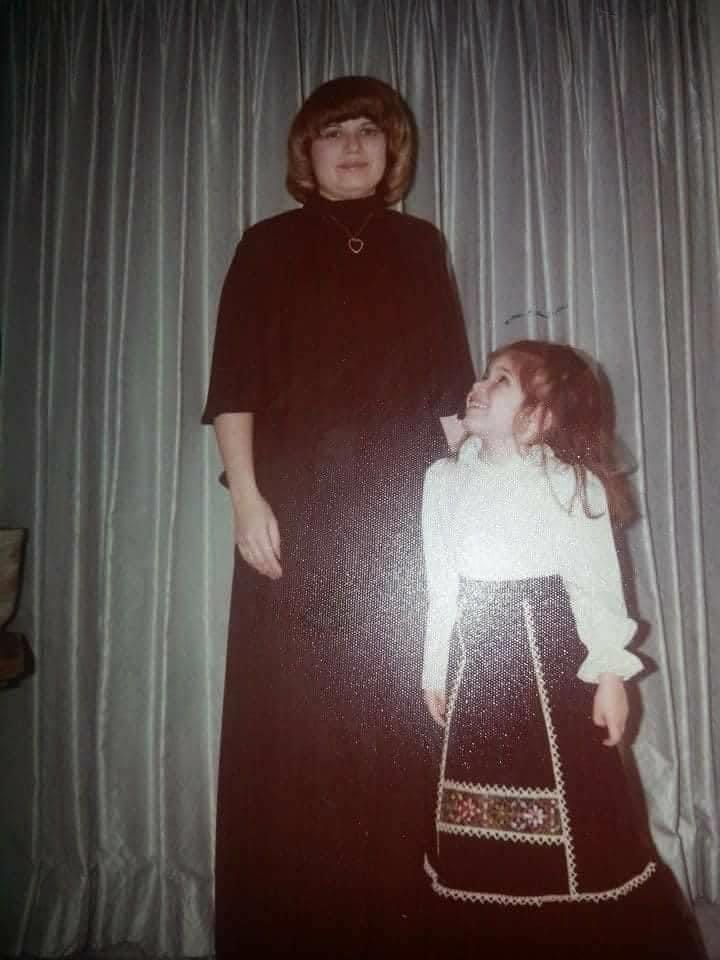
Today is my mom’s yahrtzeit, the anniversary of her death on the Jewish calendar. Twelve years gone, I think of this as almost like the bat mitzvah year of her absence from my life. The grief is no longer new, but still evolving for me in ways that make it clear it hasn’t yet settled into what it’s going to be. A loss in its adolescent stage, shall we say. What makes this yahrtzeit feel a little different is that it happens to coincide with her birthday. Today, Arlene Sue Weiner Zakarin would have been 81.
She missed a lot of milestones. Her grandchildren’s b’nei mitzvah, which occurred just 6 months after her death. Their graduations from high school and college, and the countless accomplishments and proud moments they have given us over the years. My transition from working with survivors of domestic and sexual violence to running a state based gun violence prevention organization. Starting my writing journey, which I think would have particularly resonated with her. My mom was a voracious reader of the news. She subscribed to multiple papers and read them all. She was known for yelling at the TV during CSPAN reports she found egregious, and then calling me to share her thoughts on whatever story was causing her agitation that day.
So I like to think she’d be very supportive of me using writing as an outlet for the agitation she passed down to me. She’d be especially thrilled to know that the second essay I wrote for publication was about… her. In 2018, I wrote an essay called “My mom used to say” which was about showing up Jewishly in the work of social justice, based on words my mom would tell me over and over again:
“Do good things and tell people you’re Jewish.”
I have thought about these words, and thought about that essay, more times than I can possibly recount. Particularly over these past few years, as Jews ponder their engagement in lefty spaces, these words run on repeat in my brain. In my gut too. I have many thoughts about the weight of those words and what they mean to me in the present moment. But for now I just want to share the essay as I wrote it eight years ago to honor my mom — and her legacy — on the occasion of her birth and twelve years after her death.
Originally published in the Jewish Women’s Archive blog and then again in “Loud, Proud, and Jewish”, an anthology edited by Rabbi Menachem Creditor
My Mom Used to Say…
My mom has been gone for over four years now, and to this day, there are about a thousand things that trigger my memories of her: the smell of chicken soup on my stove, the first notes of a Carole King song coming up on my playlist, the feel of her ring on my finger. My mom was quite the news hound, and I still have the impulse to pick up the phone to call her every time there is a major political development, which has been nearly every day these past two years. After this year’s midterm elections, I imagined how delighted she would have been with the new generation of women staking their place in the halls of Congress, how proud she would be of her grandson live-tweeting election results. This is to say, her absence remains very present for me.
Lately, I have found myself thinking a lot about something my mom used to say to me when I was growing up. Let me first admit that, as for so many kids, a great deal of my mom’s “important stuff to tell me” went in one ear and out the other. But one of her sayings lodged itself in my brain, not because I found it to be particularly wise or insightful, but because it drove me nuts every time she said it. It was her go-to statement whenever she was cajoling me into doing something she considered a mitzvah, especially when I wasn’t exactly jumping at the opportunity. She would look at me with that, you know, mom look, and say, “Do good things and tell people you’re Jewish.”
I would look right back at her and… roll my eyes. I found this to be such an old-world, almost paranoid way of thinking. Like we should prove that Jews are good people by being extra nice and then saying “Hey, did I happen to mention that I'm Jewish?” I grew up around Holocaust survivors, so I understood the lingering worry about how the rest of the world viewed Jews. And like so many others in the Jewish community, I bought into the collective pride when someone famous turned out to be one of the tribe—did you know that Paul Newman has a Jewish parent? But overall, my mom’s saying never sat well with me.
Shouldn’t you do good things just for the sake of doing good, and not as an advertisement for the Jewish people? Yes, history had not been kind to us, but this wasn't Germany in the 1930s, it was heavily Jewish Long Island in the 1980s. I was lucky to live in a community where I didn’t have to think about being Jewish and what that meant to my existence in the larger world. I became involved in social justice causes from an early age, but felt absolutely no need to put myself out there as a Jew when I engaged in this work.
That feeling has carried well into my adult life. I have dedicated my career to addressing and ending domestic and sexual violence, and wherever I’ve worked, folks have known I was Jewish. There’s nothing like taking endless days off in September/October to highlight one's Jewishness. But until recently, I never really brought my Jewish self to my work. I never expressed that my commitment to social justice is grounded in my identity as a Jew.
What changed this? A few years ago, I became involved with an interfaith coalition in the city of Brockton, Massachusetts, where I have worked for several years. The executive director of the coalition asked me to speak at a May Day rally for immigrant rights, and she wanted me to touch on the intersection between immigration policies and safety for survivors of domestic and sexual violence.
I spent a great deal of time thinking about what I would say, and how I could communicate my personal investment in and connection to these issues. I was particularly sensitive to the fact that I was a white woman speaking about an issue that overwhelmingly impacts people of color, and talked through this concern with one of my coworkers who was also going to speak at the rally. During this conversation, I shared with her some stories from my own family history, stories that had led me to care so deeply about my chosen work.
My grandfather told me many stories about his upbringing, including the experience of growing up with a very violent father. I shared some of this with my coworker: How he and his five siblings would take turns staying with Ida Zakarin, their mother, in her room at night to protect her from their father, who would often return from his late night shift at work drunk and enraged. How Ida, my great grandmother, spoke no English and was dependent on her American-born children for everything from translation assistance to protection from her husband’s violence. How my great grandparents came to the United States fleeing the pogroms of Russia, leaving behind family and livelihood for an uncertain future. I explained that I came to this work because I couldn’t imagine what it was like to be Ida Zakarin, living in fear in a country that was not her own, without the ability to communicate with others outside her family. I didn’t want anyone else to feel that way, ever.
Sharing this story aloud reminded me that I had always brought my Jewish self to my work because my Jewish story inspired me to do this work in the first place. And the Jewish liturgy and teachings about welcoming the stranger continue to fuel my passion for this work. At the rally, I recognized the power of sharing this part of myself with others; my Jewish immigrant story allows me to connect with other folks and their stories. It is my sincere hope that it has also allowed them to feel a deeper sense of connection with me. I have since made it a point to bring lessons from my faith and family history to my work towards culture change and social justice. It just feels more authentic to do so.
Given that, I would like to propose a small amendment to my mom’s saying. Instead of “Do good things and tell people you are Jewish,” I’d prefer to say this: “Do good things with and for others, and bring your Jewish self when you do so.” Do the hard work with folks who are nothing like you, but be clear about who you are and the history that informs you.
I’d like to think that my mom would approve.
I do plan to write more about what this means for me as a Jew in the United States in 2026. I also want to sit more with what this means for my American Jewish community during this time of what feels like an unbridgeable divide. But today, I am wishing I could talk about this with the person who inspired these words — the person I see when I look in the mirror. The other day my best friend and I were talking about the feeling we both carry deep in our souls when we gaze in that mirror and see our mothers staring back at us. And maybe I will write more about that too. But not today. Today I will see my mom’s face in my own, and feel her words in my heart. Because those things my mom used to say still guide me today.
And for that, I am grateful.
Member discussion