The silent path from Cornell to Hope High
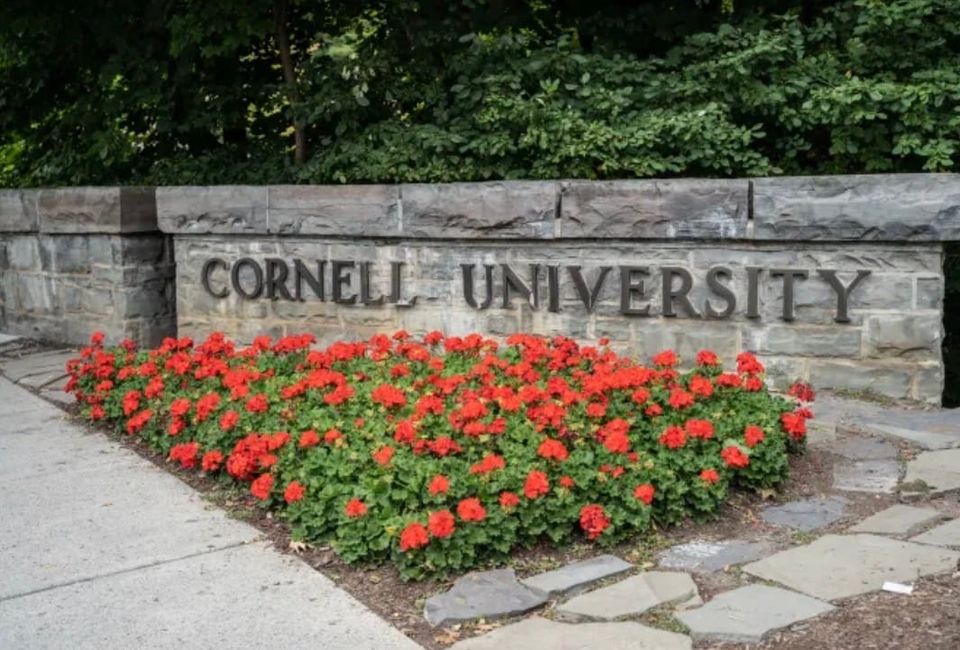
Three hundred and twenty six miles separate Cornell University from Hope High School in Providence, Rhode Island, but right now those two schools sit adjacent in my mind. Two stories of sexual assault, where multiple boys/men attacked a single female. Two instances that once again demonstrate how women and girls are not safe in educational spaces. And two examples of how sexual assault is met not with outrage, punishment, or accountability… but silence.
Two sides of the same patriarchal coin.
You may have heard about the incident at Cornell, which occurred almost two years ago but has only hit the news in recent days. A former Cornell student is suing the university and seven members of the Chi Pi fraternity, accusing the fraternity brothers of drugging and raping her and the school of failing to protect her. The details are very painful, and if you are a survivor yourself please take care should you choose to read on. The student, identified as Jane Doe, reports that she went to the fraternity intoxicated and was pressured into consuming more substances by fraternity brothers who then sexually assaulted her over multiple hours. The complaint then states that one fraternity bother sent a message to a Snapchat group called “Chi Phi Actives,” describing Doe as “free p—y” upstairs. More men came to the room, according to the filing, which accuses seven fraternity members in total of participating in the assault.
A gang rape in a fraternity. A tale that is both horrifically familiar and seemingly never ending. I am reminded of the rape wall at my university — a warning system created in the era before social media and constant electronic communications. Within days of arriving on campus I was directed to a particular stall in the women’s bathroom deep in the library basement. There I would find names. Names of fellow students to fear and fraternities to avoid. Names of the rapists who would be sitting next to me in class or the dining hall. Women would tell first year students to find those names, to be aware. Because campus rape was such an epidemic and school response was so lacking we figured out how to keep ourselves safe. But of course, you can never keep everyone safe.
So we need for colleges and universities to do everything they can to prevent rape and hold perpetrators accountable, right? But Cornell is now being called to task for their abject failure to hold the offending students accountable. Remember, this was an assault that took place over multiple hours by multiple men and was broadcasted in real time through a sexually violent message sent to a group chat. But the victim’s attorney, Thomas Giuffra, states that only two of the seven fraternity members accused were expelled, and the others received lesser sanctions including suspensions, workshops or writing essays. None were arrested.
Five of the seven offending students stayed on campus while the victim left. None of the perpetrators had any interactions with the criminal justice system. Some of them got to write essays as their “punishment”, but none of them were criminally charged — I still can’t get over that. And let’s be clear, the offending students include more than just the seven who actively participated in the assault. It includes every member of that fraternity who received the message through the group chat and did nothing in response. They may not have been present for the rape but they sure did enable it. In this era of constant attachment to one’s phone there is no way several fraternity members didn’t see that message. A message that reduced a woman to a vulgar description of her genitalia and made it clear she was there for the taking. And none of them took action to stop it.
We need to take a long hard look at the multiple men who were informed of a rape in process and chose silence. Because if we don’t figure out how to teach such young men to take action we will never be successful in preventing sexual assault.
Fast forward almost two years. It is Wednesday, September 23rd at Hope High School in Providence, Rhode Island. According to a complaint made to Providence Police, four teenaged boys raped a 16 year old girl in the school building while classes were in session. The four boys have been charged with first degree sexual assault and are currently being held at a youth detention center. The Boston Globe reports that the principal notified law enforcement immediately. I take no issue with that, nor can I comment on the case itself as so little been reported since. But I do take great issue with the district’s response to the assault.
In a letter sent to parents in the aftermath of the incident the principal called the assault an “isolated incident”, terminology that is used over and over again and always sends me into orbit. Back in 2024, when the CDC was still a reliable source of information, a report found that nearly half of women and more than 1 in 6 men experienced some form of contact sexual violence in their lifetimes. Additionally, more than 1 in 5 women and 1 in 31 men have experienced completed or attempted rape in their lifetimes. Given those staggering numbers I take great issue with people referring to sexual violence as isolated. Refusing to see sexual violence as a pattern, or as a constant threat to women and girls, is its own form of misogyny. Sexual violence is not isolated, it is everywhere. It is not random, it is a constant. Calling it isolated or random gives the impression that there’s nothing to be done about it. We need to confront sexual violence as a product of systemic and violent patriarchy. But tackling the patriarchy that underlies violence against women is a whole lot harder than waving off each assault as a random occurrence, so that’s what our society chooses to do over and over again.
But I digress. Here is the part of the Boston Globe’s article on the assault that leads me right back to the incident at Cornell:
Hope High School social studies teacher Caleigh Rockwal, who is also the secretary of the Providence Teachers Union, said that the union is calling for the district to do more to protect students and to respond to such incidents. She noted sexual assaults were also reported at Providence’s Central High School last school year.
“What we have seen in their response is they try to sweep them under the rug, try to act as if they hadn’t happened, and try to protect their image, when the focus should be on supporting students and staff,” Rockwal said.
Rockwal said district guidance has urged schools not to hold assemblies or to bring the school community together to discuss the alleged sexual assaults.
“We are supposed to continue as normal,” she said.
Do not hold assemblies. Do not bring the community together to talk about what happened. Do not discuss the incident. And do sweep the entire thing under the rug.
That is horrific. It leaves the community wondering and educators silenced. It‘s an overt instruction to carry on as if nothing traumatic has happened. It is also a completely missed opportunity to teach youth about sexual assault. Education that could empower youth to know what to do in situations like what happened at Cornell.
I have long said that children don’t spontaneously know how to have a healthy relationship. They need to be taught those skills, and ideally have them modeled at home and in their community. Learning about healthy vs. unhealthy behaviors, consent, nonviolent conflict resolution, and how to recognize the red flags of an abusive relationship are all essential. They also need to be challenged to be active in not just their own safety but the safety of others. To take action when someone is actively unsafe and to hold each other accountable when harm is caused. And parents need support on how to have those conversations with their own children.
I wish Hope High had taken this painful moment and turned it into a much needed teaching moment. I wish they had met the incident head on by equipping their school community with information. Not about the case, because I understand that cannot happen, but about sexual assault in general. Truly a missed opportunity.
A missed opportunity that loudly says that silence is the correct response to sexual assault. That is an incredibly harmful message. One that could shape future behavior for those who receive it.
I don’t know anything about the fraternity brothers who were in that group chat. I have seen a screenshot of the chat and it is terrifying. I cannot know what they were thinking, whether they were laughing or disinterested, entertained or horrified. Maybe some of them knew it was wrong and didn’t know what to do, or weren’t brave enough to stand up against their brothers. But to be honest, I don’t know that I really care. These young men messed up, and messed up badly. But we can’t just criticize the bad behavior. We can’t just tell youth what not to do, we have to tell them what they should do. We have to actively teach boys and young men what to do when they witness the dangerous behavior of their peers. We have to teach them to disrupt the group chat, to protect a woman’s drink at a bar, to get in the way when a woman is being mistreated or abused. And we have to help them understand that sometimes you have to piss off your peers in service to protecting someone’s safety. That standing up to your friend group is hard — so hard, but also so necessary. Because if they don’t, who will?
We keep us safe. That rape wall was made for women to keep other women safe. But let’s also acknowledge that safety isn’t possible without accountability. We need young men to hold each other accountable and that isn’t going to happen unless we teach them how to do it. Hope High could still choose to do so, and I certainly hope they will. I hope we all choose to do so.
Member discussion